Buy every4one.com ?
We are moving the project
every4one.com .
Are you interested in purchasing the domain
every4one.com ?
domain@kv-gmbh.de · 0541-91531010
Buy every4one.com ?
Are diverse people members of the LGBTQ community?
Yes, diverse people are members of the LGBTQ community. The LGBTQ community is made up of individuals from various backgrounds, cultures, races, and identities. It is important to recognize and celebrate this diversity within the community, as it enriches the experiences and perspectives of its members. Embracing diversity helps create a more inclusive and supportive environment for all LGBTQ individuals. **
What is the mesh equation and the node equation?
The mesh equation is a fundamental equation used in circuit analysis to calculate the current flowing in a loop of a circuit. It is based on Kirchhoff's voltage law and states that the sum of the voltage drops around a closed loop in a circuit is equal to the product of the current flowing in the loop and the total resistance of the loop. The node equation, on the other hand, is used to calculate the voltage at a specific node in a circuit. It is based on Kirchhoff's current law and states that the sum of currents entering a node is equal to the sum of currents leaving the node. This equation is used to solve for the voltage at a particular node in a circuit. **


Similar search terms for Equation
Top-Angebote
Products related to Equation:
-
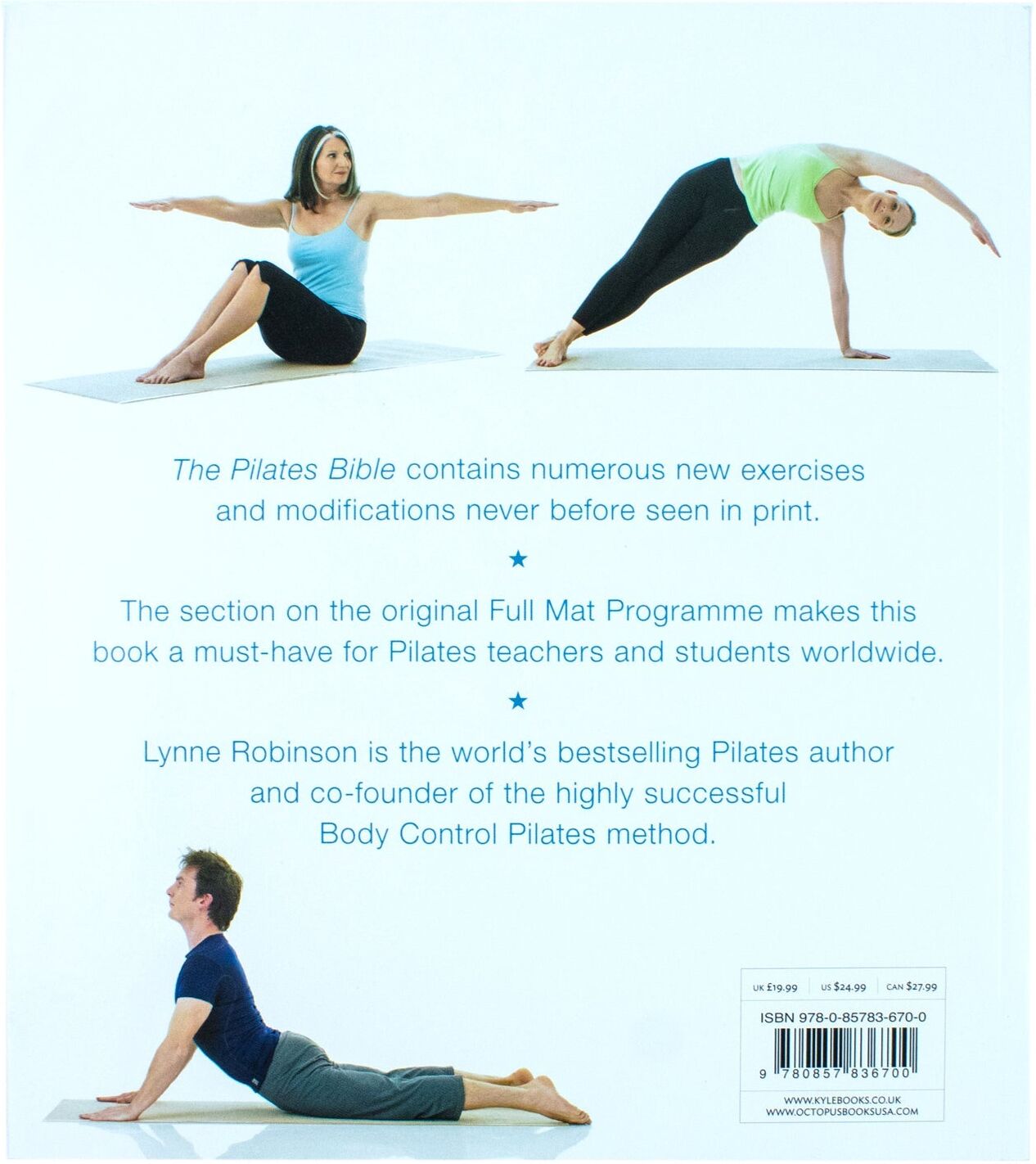
Kyle Books The Pilates Bible by Lynne Robinson, Lisa Bradshaw the most comprehensive and accessible guide to Pilates everThe Pilates Bible by Lynne Robinson, Lisa Bradshaw the most comprehensive and accessible guide to Pilates ever The Pilates Bible is the most authoritative and comprehensive book on Pilates matwork ever written and demonstrates why this hugely popular exercise has gone from cult status to an essential part of our modern lifestyle. Drawing on the latest medical research, the authors have updated old favourites as well as introduced many new. All can be performed with little or no equipment and The Pilates Bible allows you to progress safely at your own pace through Beginners, Intermediate and Advanced. There are also special sections on Pilates for new mothers and children, people with problems such as osteoarthritis, back pain and knee injuries, as well as Pilates at the gym and the workplace, and for the performing arts and sport. This is truly the one-stop guide for Pilates novices as well as those hoping to consolidate what they already know.9,99 £*Shipping: 2,99 £Secure redirect to the provider
-
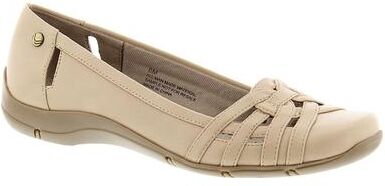
Life Stride LifeStride Diverse II - Womens 6.5 Tan Slip On Medium"*Make the transition into warm weather easy with this skimmer's perfect balance of cutouts and coverage *Faux leather or canvas upper *Plush footbed with Soft System® cushioning technology *Flexible rubber-like sole *3/4"" heel height"64,99 $*Shipping: 6,95 $Secure redirect to the provider
-
Life Stride LifeStride Diverse II - Womens 9.5 Tan Slip On W"*Make the transition into warm weather easy with this skimmer's perfect balance of cutouts and coverage *Faux leather or canvas upper *Plush footbed with Soft System® cushioning technology *Flexible rubber-like sole *3/4"" heel height"64,99 $*Shipping: 6,95 $Secure redirect to the provider


-
'Equation and what?'
Equation and inequality are two fundamental concepts in mathematics. An equation is a statement that two expressions are equal, while an inequality is a statement that two expressions are not equal. Equations are used to find the value of a variable that makes the equation true, while inequalities are used to compare two quantities. Both equations and inequalities are essential tools in solving mathematical problems and modeling real-world situations. **
-
Is a linear equation the same as a parameter equation?
No, a linear equation and a parameter equation are not the same. A linear equation is an equation of the form y = mx + b, where m and b are constants and x and y are variables. A parameter equation, on the other hand, is an equation that contains parameters, which are variables that represent certain values in the equation. Parameter equations can be linear or non-linear, but the presence of parameters distinguishes them from regular linear equations. **
-
How can one reduce this equation to a quadratic equation?
To reduce an equation to a quadratic equation, one can use the method of substitution. By substituting a variable for a certain expression in the equation, one can transform the equation into a quadratic form. Another method is completing the square, which involves rearranging the equation to isolate the quadratic term and then adding or subtracting a constant to complete the square. Additionally, one can use the quadratic formula to solve for the roots of the equation, which can help in reducing the equation to a quadratic form. **
-
How can a coordinate equation be converted into a normal equation?
A coordinate equation can be converted into a normal equation by rearranging the terms to isolate the dependent variable on one side of the equation. This involves performing algebraic operations such as addition, subtraction, multiplication, and division to simplify the equation. Once the dependent variable is isolated, the equation is in normal form and can be used to solve for the variable in terms of the independent variables. This process allows for a clearer understanding of the relationship between the variables and makes it easier to analyze and interpret the equation. **


What is the second-order difference equation for an inhomogeneous equation?
The second-order difference equation for an inhomogeneous equation is of the form \(y[n] - a_1y[n-1] - a_2y[n-2] = x[n]\), where \(y[n]\) represents the output sequence, \(x[n]\) represents the input sequence, and \(a_1\) and \(a_2\) are constants. This equation describes how the current output value \(y[n]\) is related to the previous two output values \(y[n-1]\) and \(y[n-2]\), as well as the current input value \(x[n]\). The inhomogeneous term \(x[n]\) represents any external influences or disturbances acting on the system. **
How can one convert a coordinate equation into a normal equation?
To convert a coordinate equation into a normal equation, you can start by rearranging the equation to isolate the dependent variable on one side. Then, you can simplify the equation by combining like terms and performing any necessary operations. Finally, you can rewrite the equation in standard form, which typically involves expressing the equation in terms of y = mx + b, where m is the slope and b is the y-intercept. **
Top-Angebote
Products related to Equation:
-
Our Voices: Neighborhood & Community Boxed SetFoster a feeling of belonging while building key reading skills with these colorful storybooks that spotlight a variety of neighborhoods and communities. The 10 charming stories feature characters from different cultural backgrounds who learn about...30,59 $*Shipping: 0,00 $Secure redirect to the provider
-
Life Stride LifeStride Diverse II - Womens 8.5 White Slip On W"*Make the transition into warm weather easy with this skimmer's perfect balance of cutouts and coverage *Faux leather or canvas upper *Plush footbed with Soft System® cushioning technology *Flexible rubber-like sole *3/4"" heel height"64,99 $*Shipping: 6,95 $Secure redirect to the provider
-
Kyle Books The Pilates Bible by Lynne Robinson, Lisa Bradshaw the most comprehensive and accessible guide to Pilates everThe Pilates Bible by Lynne Robinson, Lisa Bradshaw the most comprehensive and accessible guide to Pilates ever The Pilates Bible is the most authoritative and comprehensive book on Pilates matwork ever written and demonstrates why this hugely popular exercise has gone from cult status to an essential part of our modern lifestyle. Drawing on the latest medical research, the authors have updated old favourites as well as introduced many new. All can be performed with little or no equipment and The Pilates Bible allows you to progress safely at your own pace through Beginners, Intermediate and Advanced. There are also special sections on Pilates for new mothers and children, people with problems such as osteoarthritis, back pain and knee injuries, as well as Pilates at the gym and the workplace, and for the performing arts and sport. This is truly the one-stop guide for Pilates novices as well as those hoping to consolidate what they already know.9,99 £*Shipping: 2,99 £Secure redirect to the provider
-
Are diverse people members of the LGBTQ community?
Yes, diverse people are members of the LGBTQ community. The LGBTQ community is made up of individuals from various backgrounds, cultures, races, and identities. It is important to recognize and celebrate this diversity within the community, as it enriches the experiences and perspectives of its members. Embracing diversity helps create a more inclusive and supportive environment for all LGBTQ individuals. **
-
What is the mesh equation and the node equation?
The mesh equation is a fundamental equation used in circuit analysis to calculate the current flowing in a loop of a circuit. It is based on Kirchhoff's voltage law and states that the sum of the voltage drops around a closed loop in a circuit is equal to the product of the current flowing in the loop and the total resistance of the loop. The node equation, on the other hand, is used to calculate the voltage at a specific node in a circuit. It is based on Kirchhoff's current law and states that the sum of currents entering a node is equal to the sum of currents leaving the node. This equation is used to solve for the voltage at a particular node in a circuit. **
-
'Equation and what?'
Equation and inequality are two fundamental concepts in mathematics. An equation is a statement that two expressions are equal, while an inequality is a statement that two expressions are not equal. Equations are used to find the value of a variable that makes the equation true, while inequalities are used to compare two quantities. Both equations and inequalities are essential tools in solving mathematical problems and modeling real-world situations. **
-
Is a linear equation the same as a parameter equation?
No, a linear equation and a parameter equation are not the same. A linear equation is an equation of the form y = mx + b, where m and b are constants and x and y are variables. A parameter equation, on the other hand, is an equation that contains parameters, which are variables that represent certain values in the equation. Parameter equations can be linear or non-linear, but the presence of parameters distinguishes them from regular linear equations. **
Similar search terms for Equation
-
Life Stride LifeStride Diverse II - Womens 6.5 Tan Slip On Medium"*Make the transition into warm weather easy with this skimmer's perfect balance of cutouts and coverage *Faux leather or canvas upper *Plush footbed with Soft System® cushioning technology *Flexible rubber-like sole *3/4"" heel height"64,99 $*Shipping: 6,95 $Secure redirect to the provider
-
Life Stride LifeStride Diverse II - Womens 9.5 Tan Slip On W"*Make the transition into warm weather easy with this skimmer's perfect balance of cutouts and coverage *Faux leather or canvas upper *Plush footbed with Soft System® cushioning technology *Flexible rubber-like sole *3/4"" heel height"64,99 $*Shipping: 6,95 $Secure redirect to the provider
-
Life Stride LifeStride Diverse II - Womens 7 Tan Slip On N"*Make the transition into warm weather easy with this skimmer's perfect balance of cutouts and coverage *Faux leather or canvas upper *Plush footbed with Soft System® cushioning technology *Flexible rubber-like sole *3/4"" heel height"64,99 $*Shipping: 6,95 $Secure redirect to the provider
-
Life Stride LifeStride Diverse II - Womens 6.5 Tan Slip On Medium"*Make the transition into warm weather easy with this skimmer's perfect balance of cutouts and coverage *Faux leather or canvas upper *Plush footbed with Soft System® cushioning technology *Flexible rubber-like sole *3/4"" heel height"64,99 $*Shipping: 6,95 $Secure redirect to the provider
-
How can one reduce this equation to a quadratic equation?
To reduce an equation to a quadratic equation, one can use the method of substitution. By substituting a variable for a certain expression in the equation, one can transform the equation into a quadratic form. Another method is completing the square, which involves rearranging the equation to isolate the quadratic term and then adding or subtracting a constant to complete the square. Additionally, one can use the quadratic formula to solve for the roots of the equation, which can help in reducing the equation to a quadratic form. **
-
How can a coordinate equation be converted into a normal equation?
A coordinate equation can be converted into a normal equation by rearranging the terms to isolate the dependent variable on one side of the equation. This involves performing algebraic operations such as addition, subtraction, multiplication, and division to simplify the equation. Once the dependent variable is isolated, the equation is in normal form and can be used to solve for the variable in terms of the independent variables. This process allows for a clearer understanding of the relationship between the variables and makes it easier to analyze and interpret the equation. **
-
What is the second-order difference equation for an inhomogeneous equation?
The second-order difference equation for an inhomogeneous equation is of the form \(y[n] - a_1y[n-1] - a_2y[n-2] = x[n]\), where \(y[n]\) represents the output sequence, \(x[n]\) represents the input sequence, and \(a_1\) and \(a_2\) are constants. This equation describes how the current output value \(y[n]\) is related to the previous two output values \(y[n-1]\) and \(y[n-2]\), as well as the current input value \(x[n]\). The inhomogeneous term \(x[n]\) represents any external influences or disturbances acting on the system. **
-
How can one convert a coordinate equation into a normal equation?
To convert a coordinate equation into a normal equation, you can start by rearranging the equation to isolate the dependent variable on one side. Then, you can simplify the equation by combining like terms and performing any necessary operations. Finally, you can rewrite the equation in standard form, which typically involves expressing the equation in terms of y = mx + b, where m is the slope and b is the y-intercept. **
* All prices are inclusive of VAT and, if applicable, plus shipping costs. The offer information is based on the details provided by the respective shop and is updated through automated processes. Real-time updates do not occur, so deviations can occur in individual cases. ** Note: Parts of this content were created by AI.